
Abstract
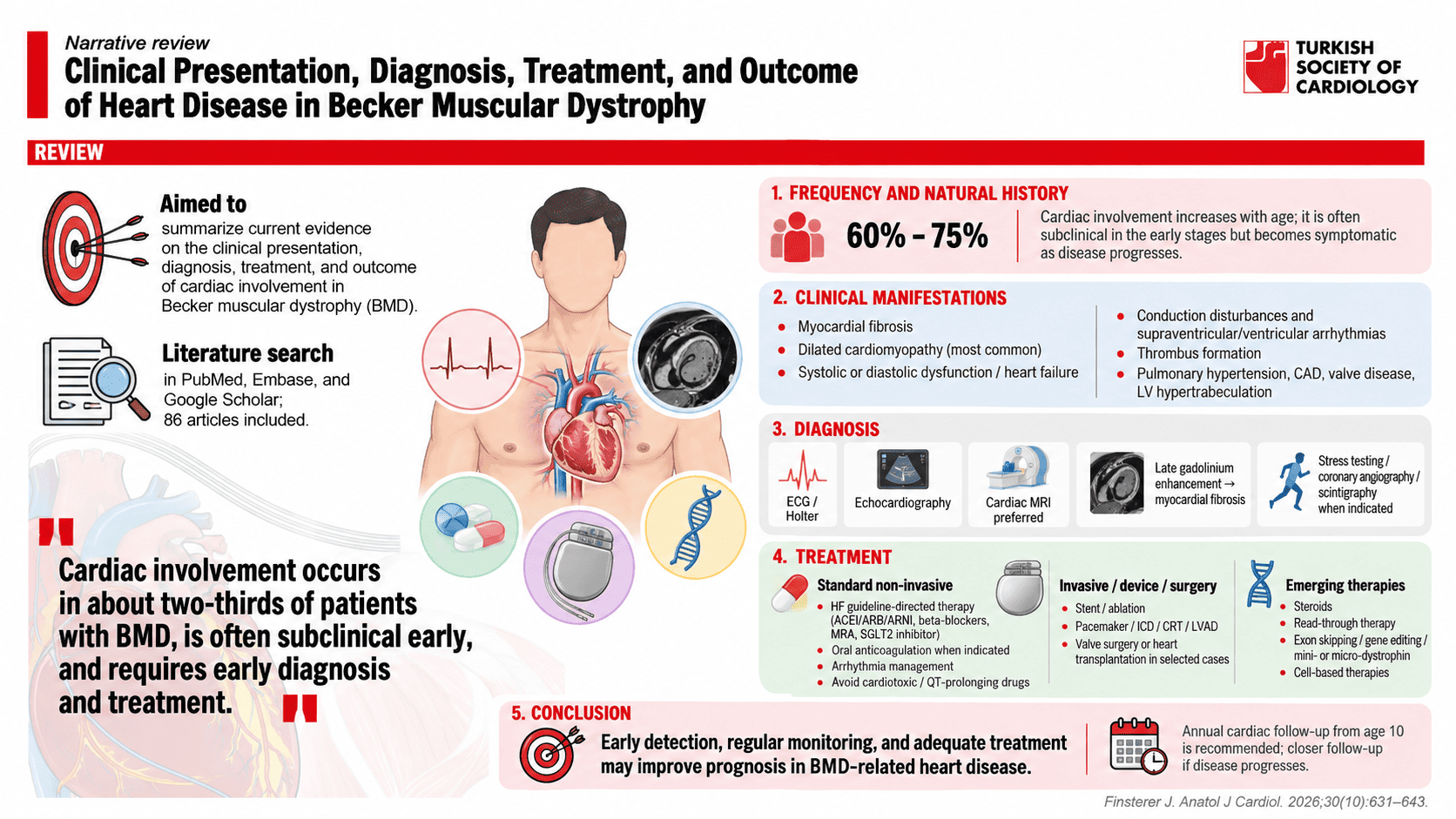
Becker muscular dystrophy (BMD) is a primary myopathy caused by mutations in the dystrophin gene on chromosome Xq21.2, which often affects the myocardium and cardiac conduction system. However, there is limited experience with cardiac disease in BMD. This review aims to summarize and discuss recent advances and future perspectives regarding the clinical presentation, diagnosis, treatment, and outcome of cardiac involvement in BMD. Data were retrieved by searching for relevant articles in the PubMed and Google Scholar databases. Cardiac disease in BMD is characterized by myocardial fibrosis, can be subclinical or clinical, and manifests as left or right ventricular systolic dysfunction with/without heart failure due to dilated or hypertrophic cardiomyopathy, diastolic dysfunction with preserved/decreased systolic function, conduction disturbances and supraventricular/ventricular arrhythmias, thrombus formation, arterial hypertension, pulmonary hypertension, left ventricular hypertrabeculation, coronary artery disease, and valve defects. Cardiac involvement in BMD must be detected and treated at an early stage, because it progresses over time and has a significant impact on the course of the disease. Established treatment methods include non-invasive therapies with small molecules and catheter-based invasive therapies (stent implantation, endocardial and epicardial ablation), device-related treatments (pacemaker, implantable cardioverter–defibrillator, cardiac resynchronization therapy, left ventricular assist device), and heart surgery. Cardiac involvement in BMD occurs in about two-thirds of patients, is subclinical in the early stages but becomes symptomatic as the heart disease progresses, requires early diagnosis, and can be treated with non-invasive and invasive therapies, with prognosis improving with early detection and adequate treatment.
Graphical Abstract